Proprietary Detection Technologies
Revolutionary Exploration Technology
Claiming something is ‘revolutionary’ needs to be backed up with hard evidence. MinBioteck has unlocked a new link between geology and biology. We have successfully and consistently corroborated the presence of subsurface mineralisation through the analysis of surface soils.
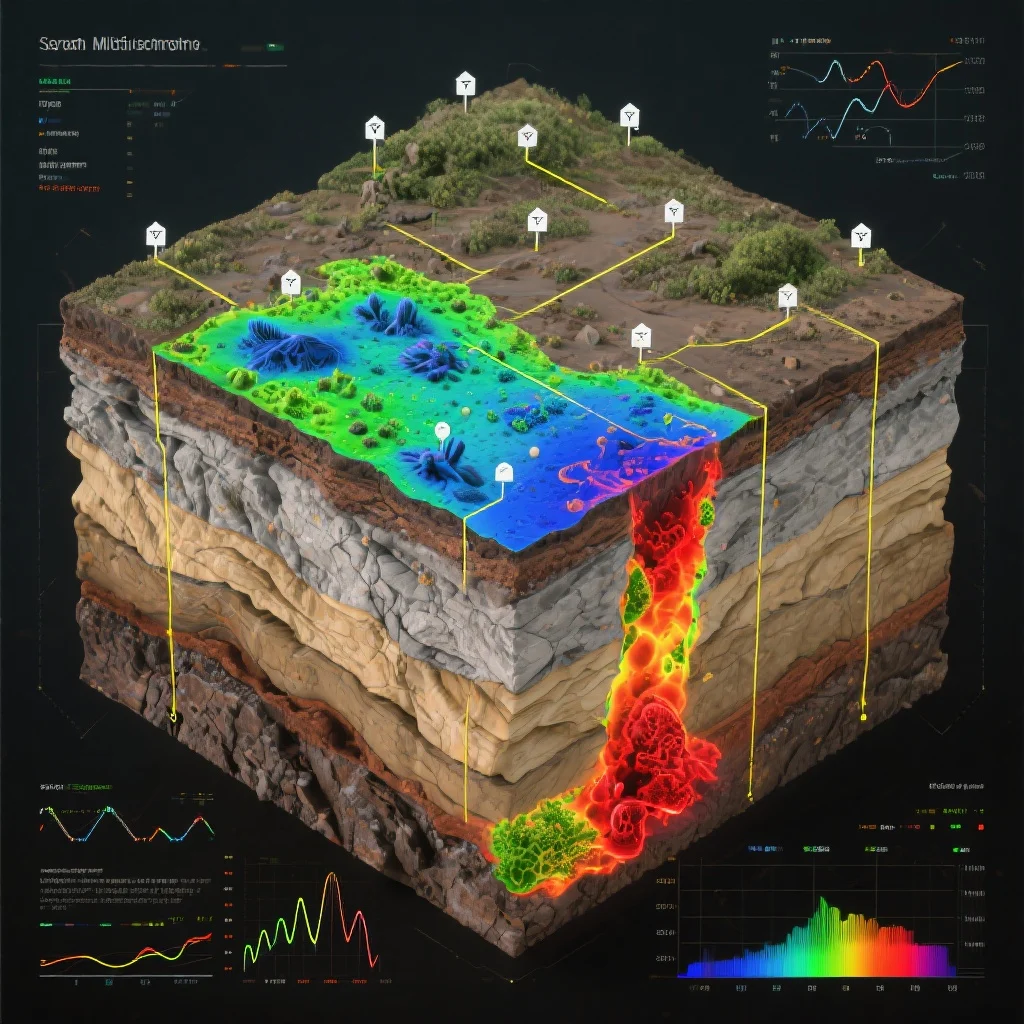
For example, we have identified specific groups of organisms that indicate the presence of copper in the ground. Not at the surface, but buried deep under ground.
The development of new mathematical models now incorporates biological elements, allowing us to model and predict the depth and extent of the target mineralisation. From this it is possible to create a 3D-voxel solution outlining the location, depth and shape of the mineral volume. Solving a three-dimensional geology problem using only biology indicates an entirely new paradigm for the application of classical physics. Incidentally, the 3D voxel solution presents as a grade x density product. Hence if the density is known, you have a good estimate of the grade. This is revolutionary.
Multi-Mineral Detection
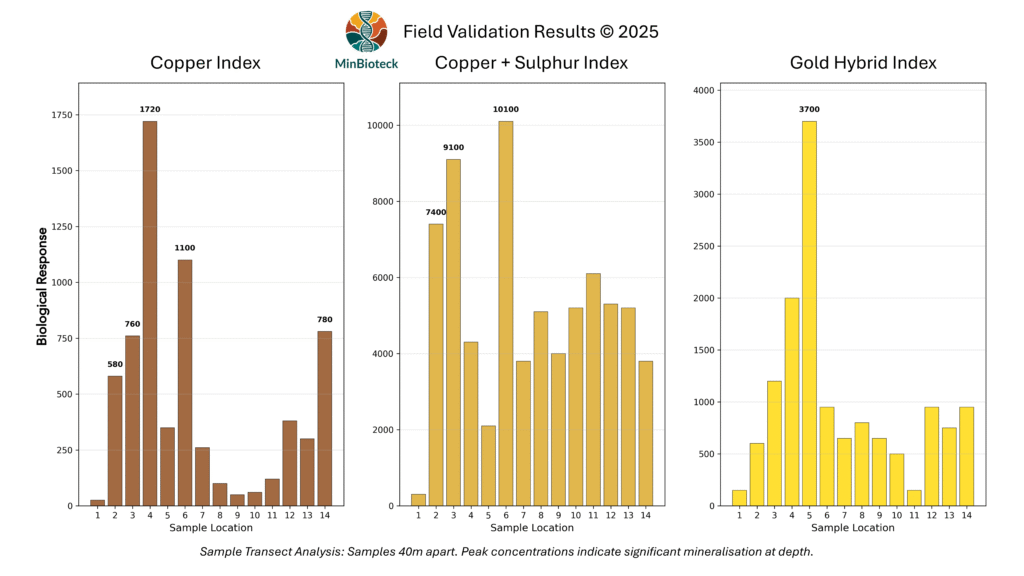
Unlocking the secrets of biological responses to mineralisation has enabled us to quantify the tenor of multiple elements from a single analysis. There is no requirement to process specific elements separately. Everything is available from the start.
Our work to date has successfully identified Copper, Lithium, Nickel (komatiite-hosted) and sulphur. We are confident that specific biological responses also exist for Lead, Zinc, Uranium, rare earths, Kimberlite pipes and Carbonatites. Gold is a special case with a strong theoretical case for detecting orogenic gold; however, as with other metals, calibration is necessary.
Importantly, our analysis currently allows differentiation between mineralised and unmineralised sulphide-rich sources. Discovering an untested EM or IP anomaly may sound appealing, but drilling a barren massive-sulphide conductor or chargeability anomaly is something we have all done and wished we could avoid. It is preferable to know before drilling whether your geophysical target is mineralised, and where and to what extent it is mineralised. Our technology achieves this now.
Early Resource Mapping
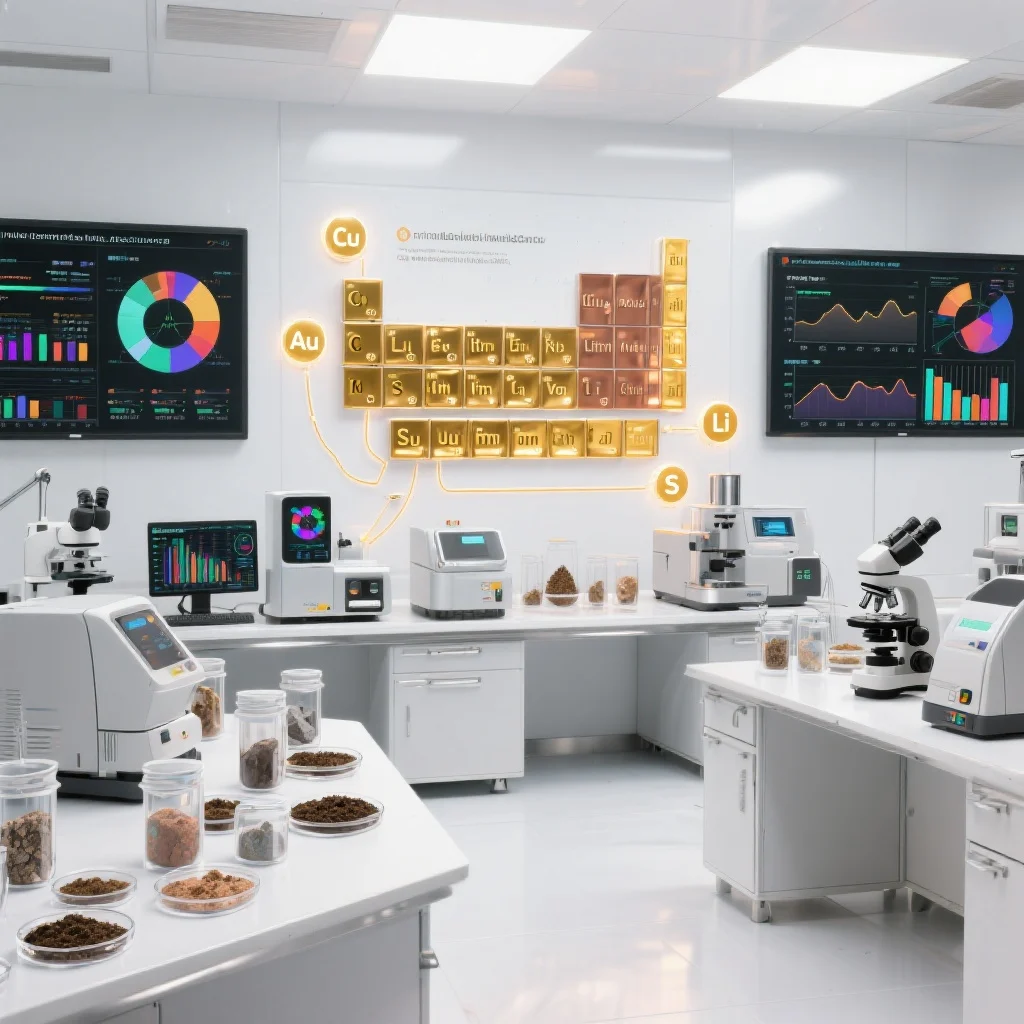
You have discovered what you hope is a major resource. Now the expense starts. Resource definition drilling is costly because it is used to define the extent of mineralisation. Imagine being able to construct a basic resource outline for your entire deposit using appropriately spaced surface soil samples. The potential exists for this to be a reality.
A voxel-based model of the target mineralisation enables accurate, precise deployment of resource drilling, with the margins of your deposit defined from the outset.
Multi-Spectral Biological Imaging
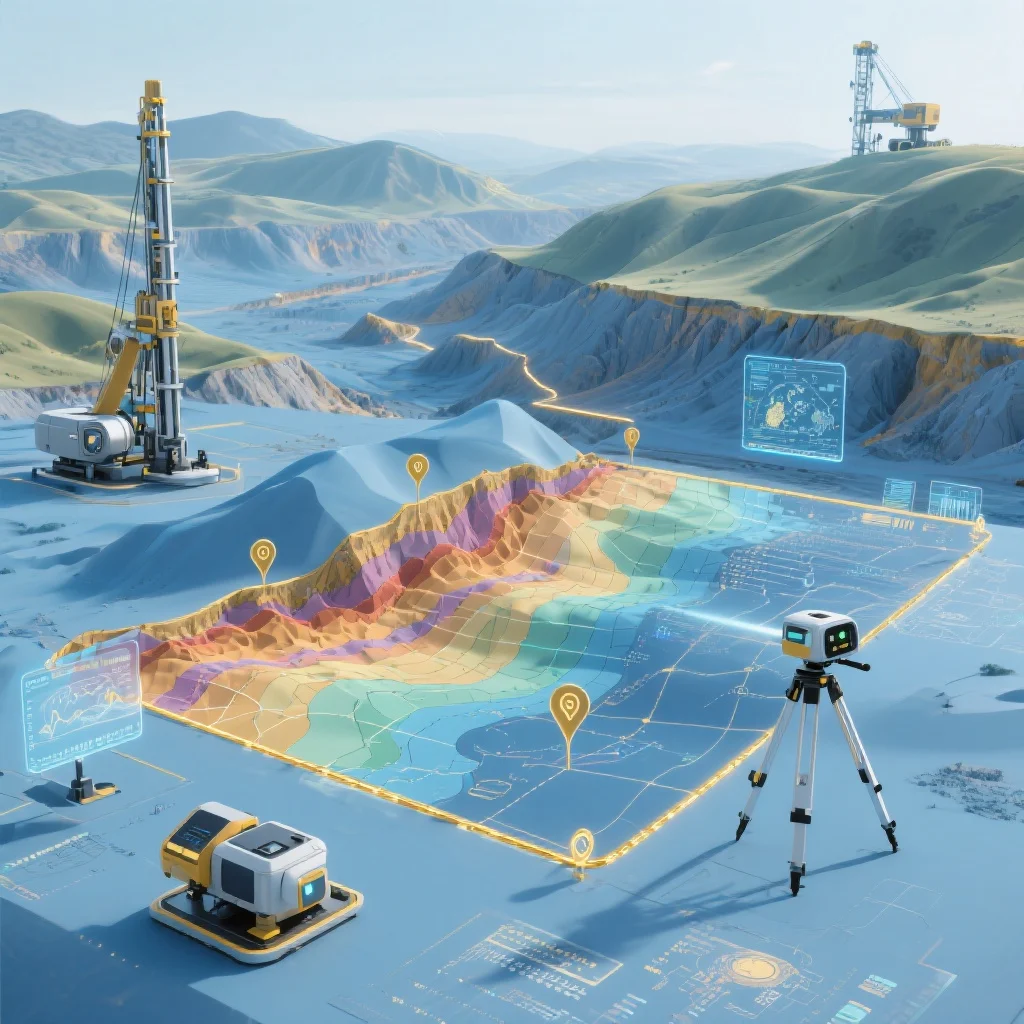
Numbers tell us a story. The size of the numbers leads us to conclude that there is more of a mineral here than there is over there. However, studying what makes up the total value of a biological “number” has profound value.
We ask, “What is the nature of the anomaly, and how is it structured?”
The Signal: Shifting biological ratios reflect subtle changes in the geochemical environment (the redox front, pH, sulphur speciation)
The Geological Analogy: Each organism is acting as a unique living sensor for a specific set of geochemical conditions
The Result: A detailed map from which we can infer zonation, complexity and geochemical gradients
We have moved from finding anomalies to using biology as a high-fidelity biological lens to image the intricate details of the concealed geological and geochemical architecture.